Key takeaways about an Explanation of Benefits:
- An EOB (Explanation of Benefits) is a summary of your dental services, insurance coverage, and potential out-of-pocket costs.
- Reviewing your EOB helps you understand how your dental benefits were applied and what you may owe.
- Checking your EOB for errors helps ensure your dental claims are accurate and lets you know when to contact your insurance provider.
Navigating dental insurance terms and documents can feel like deciphering a foreign language.
One such document that frequently leaves patients scratching their heads is the Explanation of Benefits (EOB).
What is an EOB?
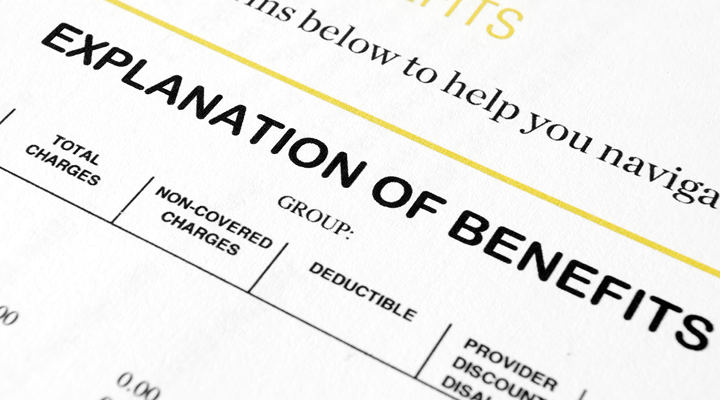
An Explanation of Benefits, commonly referred to as an EOB, is a paper or digital statement sent by your dental insurance provider detailing the costs of covered services or treatments, as well as any charges you’re responsible for.
While it may seem similar to a bill at first glance, an EOB serves a different purpose altogether. Instead of indicating the amount you owe, it summarizes the claims processed by your insurance company, outlining what services were provided, the associated costs, and how much your insurance covers.
If your procedure with your dentist was fully covered, you won’t receive an EOB. That’s because we covered the rate the dentist requested.
Why is an EOB important?
An EOB provides information about any outstanding payments owed to your dentist. It also serves as an opportunity to verify that you’ve been accurately billed for the services and to ensure that the charges align with your plan’s coverage.
It’s important to review your EOB to check for any billing mistakes. Typically, an EOB provides information such as the treatments administered, dentist fees, insurance reimbursements, potential costs for deductibles or copays, details on procedures not covered by your policy, coordination of benefits (if applicable), utilization of your annual maximum, and your contributions toward the deductible in the current benefit year.
An EOB is a way to keep all parties involved informed and honest. It allows us to communicate to you, our member, what exactly you are financially responsible for. You shouldn’t ever pay any more or any less than what is stated on the EOB. If your statement says, “not chargeable to patient” anywhere, this means the dentist must write off a portion of the charge because the bill exceeds their contracted rate.
What to do if there is a mistake on your EOB
You shouldn’t have to take any action when you receive an EOB. However, if you didn’t receive the services listed on the document or if something doesn’t match what you recall from your treatment, it’s important to contact us.
The bottom line on an EOB
Dental insurance terminology can be confusing, but understanding your EOB doesn’t have to be. Think of it as a snapshot of how your dental benefits were used and what portion of the cost was covered by your plan.
Reviewing your EOB after treatment can help you stay informed, avoid billing surprises, and ensure everything was processed accurately.
When in doubt, we’re here to help answer your questions and make the process easier to understand.