
*Updated June 2026
Key takeaways about oral health while camping:
- When planning your camping grocery list, it’s best to consider how these choices will impact both your oral and overall health.
- Maintaining your oral hygiene while camping can be a challenge, especially with limited access to running water or clean storage for your dental supplies. However, it’s important to do so!
- Packing proper oral health products, tooth-friendly foods, and following our tips will help you prioritize your oral health no matter where your adventures take you.
Do you plan on going camping this summer?
Camping is a great way to connect with nature and spend meaningful time with family and friends. However, keeping a good oral health routine while enjoying the wilderness isn’t always easy.
The good news? It can be done!
With a little planning, tooth-friendly meals, and mindful eating and drinking, you can keep your mouth happy while experiencing the great outdoors!
How to pack tooth-friendly food and drinks for camping
When planning your camping grocery list, consider choosing foods that support both your oral and overall health.
Here are a few simple tips to keep in mind:
Pack plenty of water
Water is one of the most essential items to pack for any camping trip. According to the National Park Service, each person should have at least two liters of drinking water per day, plus extra for cooking, cleaning, and washing. Staying hydrated is key, especially when spending time outdoors.
Water is also a tooth-friendly alternative to sugary drinks like soda and juice. When packing your bags, be sure to fill up a water bottle with fluoridated tap water. According to the Johns Hopkins School of Public Health, “The fluoride in our water has passively protected the oral health of Americans for decades by reducing cavities, tooth decay, and dental health disparities.”
Learn more about the benefits of water to your oral health.
Limit alcohol consumption
Alcohol consumption and camping often tend to go together, but your mouth will thank you if drinking is done in moderation or skipped all together.
Alcohol can negatively impact your oral health in several ways. It can cause dry mouth, increase the risk of gum disease, and expose teeth to sugars and acids that weaken enamel, the protective outer layer of the tooth. Over time, this can raise the risk of cavities.
Regular alcohol use has also been linked to an increased risk of oral cancer.
Choose red meat to strengthen teeth
Although it’s important to eat red meat in moderation, including red meat in a couple of meals may help your oral health!
According to an article published in Frontiers, “Red meat is a nutrient-dense food that provides highly bioavailable protein and several essential micronutrients often lacking in the diet, including iron, zinc, and vitamin B12.”
Iron, a mineral responsible for red blood cell production, is particularly important. Low iron levels can lead to anemia, a condition that may increase the risk of developing oral health problems like periodontal disease.
Additionally, red meat serves as a valuable source of vitamin B12. Individuals lacking in vitamin B12 may experience symptoms such as mouth and tongue soreness, among others.
Snack on raw nuts
Nuts make for a convenient and nutritious snack option every day, and that’s even more true when camping.
Many nuts and seeds contain vitamins and minerals that can help strengthen and protect teeth. Cashews, for instance, serve as an excellent source of phosphorus, a mineral crucial for teeth and bone health. Like calcium, phosphorus helps build strong teeth and bone structures.
Additionally, peanuts and almonds are rich in calcium, while the latter also has vitamin E, which is known for its anti-inflammatory properties that can also reduce the impact of periodontitis.
Don’t forget fruits and veggies
Be sure to pack some fruits and veggies on your next camping adventure. Fruits and vegetables support a healthy smile by increasing saliva flow, cleaning teeth naturally, and balancing sugars with water and fiber.
They also provide key nutrients like vitamin C for gum health and vitamin A for healthy mouth tissues.
How to maintain a good oral health routine while camping
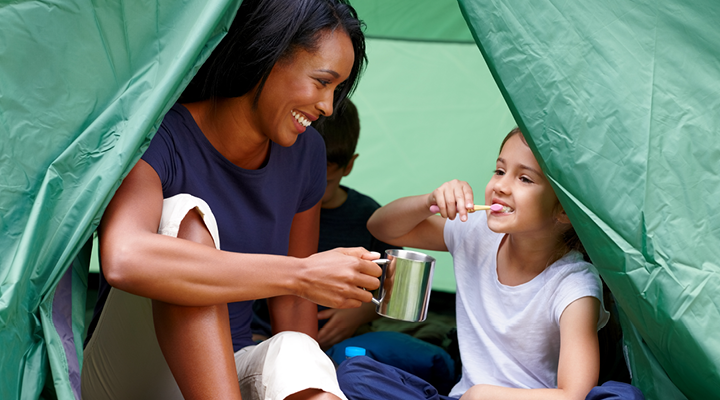
Maintaining your oral hygiene while camping can be a challenge, especially with limited access to running water or clean storage for your dental products. But even in the great outdoors, keeping your teeth and mouth clean each day is essential for your oral health.
Consider these camping-friendly oral health products:
Toothpaste dots
Have you heard of toothpaste dots?
A staple of backpackers, they make brushing your teeth while camping easy by eliminating the need to bring a tube of toothpaste. Toothpaste dots are lightweight and ideal for long camping trips. Just be sure to use a toothpaste that has been approved by the American Dental Association.
Click here for a step-by-step process to make your own toothpaste dots.
Travel toothbrush
Keep your regular toothbrush at home and opt for one that can survive time spent in the wild. Remember, toothbrushes should be stored in an upright position, where they can air dry, even when camping.
We also recommend bringing a toothbrush case to keep the bristles free from dirt and debris. Over time, germs and bacteria build up on toothbrushes. Because of this, it’s important to clean your toothbrush after every camping trip and to replace it every three to four months.
Floss
Flossing is especially important while camping because it helps remove food particles and plaque from areas your toothbrush can’t reach. Keeping up with this habit can help maintain a healthy mouth, even while enjoying the outdoors.
Since traditional dental floss is not biodegradable, be sure to dispose of it properly or consider using eco-friendly floss alternatives that are gentler on the environment.
Good oral health care while camping is possible
Don’t let outdoor living get in the way of a clean and healthy mouth. Packing proper oral health products, tooth-friendly foods, and following our oral health tips will help prioritize your oral health no matter where your adventures take you!
Looking for more oral health tips? Check out this blog: Vacation Vibes: Oral Health Tips for Travelers.